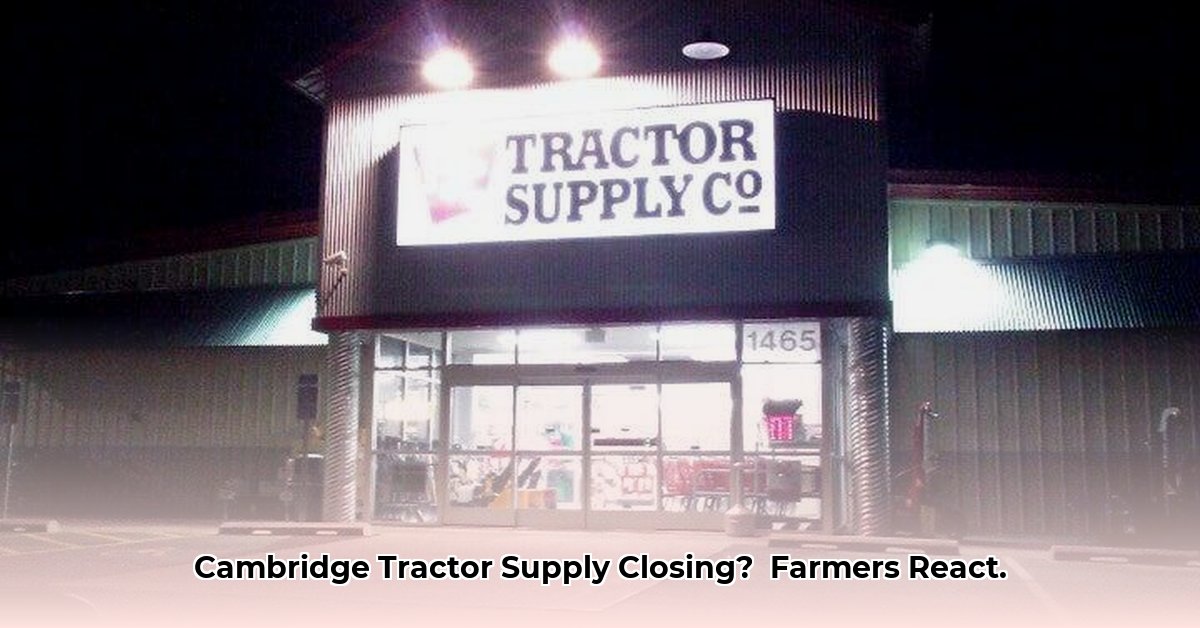
Tractor Supply Cambridge Minnesota: A Significant Disruption to Local Agriculture
The recent closure of the Tractor Supply store in Cambridge, Minnesota, has created significant challenges for local farmers. This closure, initially presented as temporary, now appears permanent, leaving farmers in Cambridge and surrounding communities – including Grandy, Harris, Braham, Isanti, Stanchfield, and North Branch – scrambling to secure essential farming supplies and services. The impact extends beyond mere inconvenience; it represents a substantial disruption to the established agricultural supply chain and poses serious threats to the economic viability of farms in the region. The increased transportation costs alone significantly impact already tight profit margins. How will farmers adapt, and what are the broader implications for food security and the regional economy? For alternative suppliers, check out other Tractor Supply locations, like this one here.
Feeling the Pinch: Economic and Logistical Impacts
The closure's ripple effects are substantial. Farmers now face significantly longer commutes to access comparable stores, translating to higher fuel costs and reduced time spent on crucial farm work. "The extra travel time and expense directly cut into our profits," explains Sarah Miller, owner of Miller Family Farms in Isanti. "It's a real blow to our bottom line, and I worry about the long-term viability of our operation." This burden is amplified for smaller farms operating on slim margins. The increased costs will inevitably pressure farmers to increase prices for their products, potentially leading to higher costs of food for consumers.
- Increased Transportation Costs: The nearest alternative supply stores are significantly further away, leading to increased fuel expenditure.
- Reduced Farm Productivity: Longer travel times translate to less time spent on critical farm tasks, impacting overall yield and efficiency.
- Threatened Farm Viability: Many small farms operate on tight margins, making the added expense of longer commutes unsustainable for some.
How will farmers adapt to these significant logistical and financial challenges? The increased costs and logistical hurdles posed by the closure raise concerns about the future of local agriculture, affecting not only farmers but also the broader community.
Immediate and Long-Term Strategies for Farmers
Farmers need actionable plans to navigate this disruption. The following steps provide a framework for immediate action and long-term resilience.
Step 1: Identifying Alternative Suppliers: Begin by thoroughly researching alternative agricultural supply stores. This includes both brick-and-mortar locations and online retailers. Carefully compare pricing, delivery times, and supplier reliability before committing.
Step 2: Collaborative Purchasing: Consider pooling resources with fellow farmers to negotiate bulk orders. This collaborative approach can leverage greater purchasing power, resulting in substantial cost savings through discounted pricing. Shared transportation further reduces costs.
Step 3: Budgetary Adjustments: Re-evaluate the farm's budget to account for increased transportation expenses. Explore fuel-efficient driving routes and explore carpooling initiatives with other farmers.
Long-Term Strategies:
Community Advocacy: Farmers and residents should actively participate in advocating for improved local infrastructure and policies to attract new businesses in the area. Collaboration with local officials and business development organizations is crucial.
Supporting Local Businesses: Actively support local businesses that provide agricultural supplies to create a more resilient local supply chain. This may involve purchasing from local suppliers, even if prices are slightly higher. Dr. David Chen, Professor of Agricultural Economics at the University of Minnesota, states, “Supporting local businesses strengthens the community, fostering economic stability and reducing reliance on distant, less reliable suppliers.”
Strategic Use of E-Commerce: Online platforms offer a larger selection of suppliers, but farmers must consider the reliability of internet access and delivery services in rural areas. Carefully assess the practicality and reliability of online solutions before committing.
Finding Alternative Agricultural Suppliers After Store Closure
The Tractor Supply closure underscores the vulnerability of rural communities reliant on a limited number of suppliers. But where can farmers turn for reliable supply chains? Several options exist.
Networking with Fellow Farmers: Communicate with other farmers to identify established relationships with alternative suppliers. Shared knowledge is invaluable.
Online Marketplaces: Platforms like Amazon and specialized agricultural e-commerce sites offer a wider selection of products. However, careful evaluation of delivery reliability is crucial.
Regional Co-operatives: Agricultural co-operatives frequently provide bulk purchasing options, leading to potential cost savings.
Wholesale Distributors: Purchasing directly from wholesale distributors bypasses the retail markup, leading to potential cost-effectiveness.
Government Resources: The USDA offers various resources and support programs for farmers, encompassing information on alternative suppliers and access to financial aid. The USDA website provides details on their various assistance programs.
Supply Chain Diversification: The closure highlights the necessity of diversifying supply sources to mitigate risks associated with the reliance on single suppliers.
The closure of the Cambridge Tractor Supply store serves as a wake-up call, highlighting the need for strengthened local supply chains and increased community resilience in rural areas. Proactive planning and collaborative efforts are essential to ensure the long-term viability of local farming operations.